By the Billr Health Team
Imagine visiting your doctor for a stubborn cough. She examines you, orders a chest X-ray, and documents everything. Days later, your insurer processes the claim using a few short codes, not pages of notes. So, what is medical coding? It’s how providers turn diagnoses, procedures, and services into standardized codes for patient records, insurance claims, and healthcare reimbursement. At Billr Health, our founders spent years inside billing departments and payer organizations, so we’ve watched one wrong code stall a claim. Here, you’ll learn the code types, the process, and where AI fits.
What Is Medical Coding?
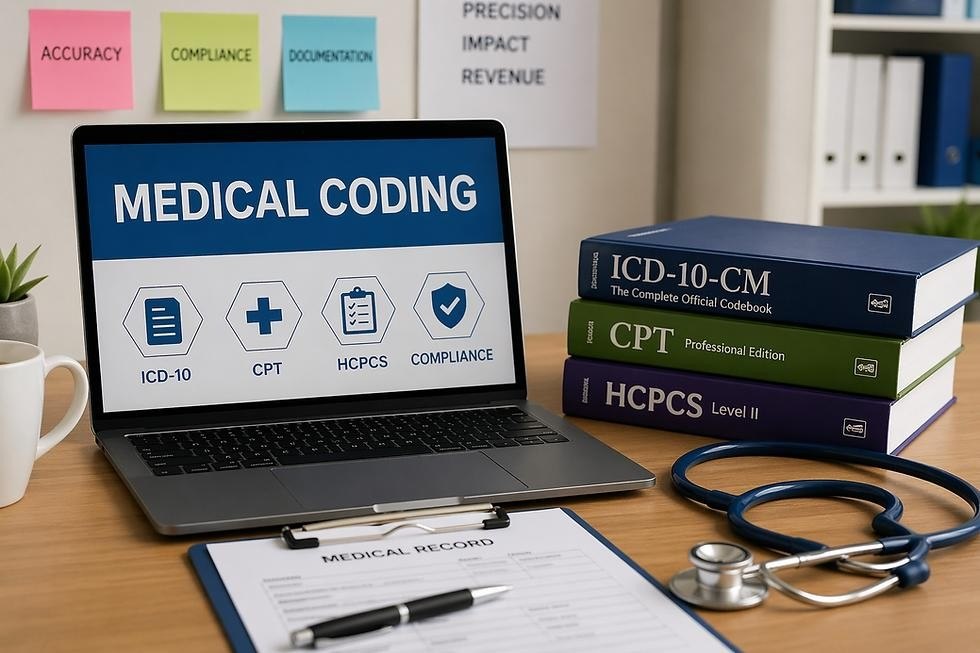
Medical coding is the process of translating clinical documentation into standardized alphanumeric codes. In simple words, it turns a doctor’s notes into a language every insurer and healthcare system understands.
Coders work from physician notes, laboratory results, radiology reports, treatment records, and patient medical history. The finished codes then travel between providers, insurance companies, and other authorized parties, under HIPAA privacy rules. Think of a grocery barcode: the cashier doesn’t need a cereal description, just the scan.
| Clinical documentation | Standardized code |
|---|---|
| Physician documents Type 2 diabetes without complications | ICD-10-CM: E11.9 |
This shows diagnosis classification only, not the full claim process.
Why Is Medical Coding Important in Healthcare?
Accurate codes keep the whole system moving. Payers expect diagnosis and procedure codes on claims, and Medicare claims are no exception. Here’s what good coding protects.
Accurate Medical Records
Consistent codes help clinicians understand a patient’s earlier diagnoses and treatments.
Proper Healthcare Reimbursement
Codes support medical necessity, showing why a service was needed, so providers are paid appropriately for documented care.
Fewer Claim Denials
Correct codes and solid documentation prevent many avoidable rejections. See the top reasons medical claims get denied.
Research and Public Health
Coded data supports disease tracking, healthcare statistics, and population health research.
Regulatory Compliance
Following official guidelines helps organizations meet documentation requirements, which also supports HIPAA-compliant medical billing.
What Are the Main Types of Medical Coding Systems?
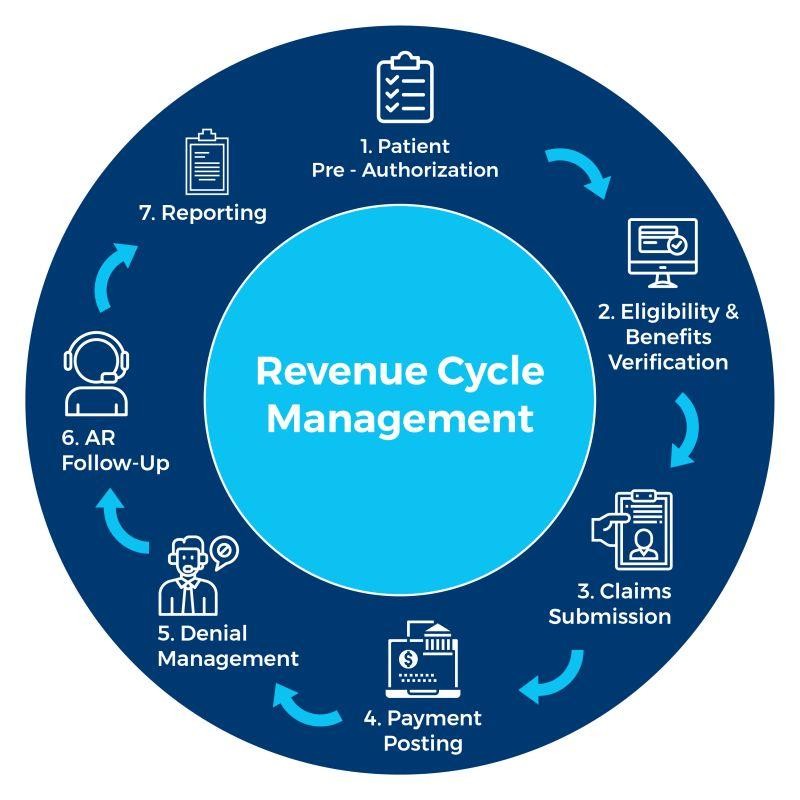
Three U.S. systems do most of the work, and they’re not interchangeable. Each answers a different question.
ICD-10-CM: Diagnosis Coding
International Classification of Diseases, Tenth Revision, Clinical Modification classifies diseases, injuries, and symptoms. It builds on the World Health Organization’s ICD-10 and is maintained in the U.S. by the National Center for Health Statistics (NCHS). These medical diagnosis codes, like E11.9, support diagnosis classification and medical necessity.
CPT: Medical Procedure Coding
Current Procedural Terminology, maintained by the American Medical Association (AMA), describes medical, surgical, and diagnostic services. For example, CPT 99213 reports an established patient office visit with low-level medical decision making. Track yearly changes in our CPT code updates for 2026.
HCPCS: Healthcare Services and Supplies
Healthcare Common Procedure Coding System Level II, maintained by the Centers for Medicare & Medicaid Services (CMS), covers products, supplies, and services CPT doesn’t, such as durable medical equipment and ambulance services.
Other Systems to Know
ICD-10-PCS covers hospital inpatient procedures, CDT covers dental procedures, and NDC identifies drugs and packages.
| Code system | Main purpose | Example |
|---|---|---|
| ICD-10-CM | Diagnoses | E11.9 |
| CPT | Procedures and services | 99213 |
| HCPCS Level II | Supplies and services | A0428 (basic life support ambulance) |
| ICD-10-PCS | Inpatient procedures | Seven characters, varies by procedure |
How Does the Medical Coding Process Work?
Here’s the typical workflow, in order.
Step 1: Review Patient Medical Records
Examine physician notes, test results, and treatment documentation.
Step 2: Identify Diagnoses and Procedures
Extract the primary diagnosis, additional conditions, and services performed.
Step 3: Select the Appropriate Codes
Check ICD-10-CM, CPT, and HCPCS descriptions and instructions, plus official guidance such as the American Hospital Association’s Coding Clinic.
Step 4: Verify Coding Accuracy
Confirm codes match the documentation, including specificity, modifiers, and medical coding guidelines.
Step 5: Enter Codes for Claim Processing
Enter verified codes into the billing system to prepare the claim.
What if a note is unclear? A compliant coder sends the provider a query instead of guessing. Our COO, Alicia Reyes, CPC, has 12 years in behavioral health and multi-specialty billing, and that rule comes straight from the field: never code what the documentation doesn’t support.
What Is the Difference Between Medical Coding and Medical Billing?
They’re neighbors, not twins. Coding translates; billing collects.
| Medical coding | Medical billing |
|---|---|
| Converts clinical information into codes | Uses codes to prepare claims |
| Focuses on diagnoses and procedures | Focuses on claim submission and payment |
| Reviews medical documentation | Reviews charges and payer requirements |
| Establishes accurate claim information | Follows up on claim status and payments |
Both sit inside revenue cycle management (RCM). Learn more in medical billing vs. medical coding and our guide to revenue cycle management in healthcare.
What Does a Medical Coder Do?
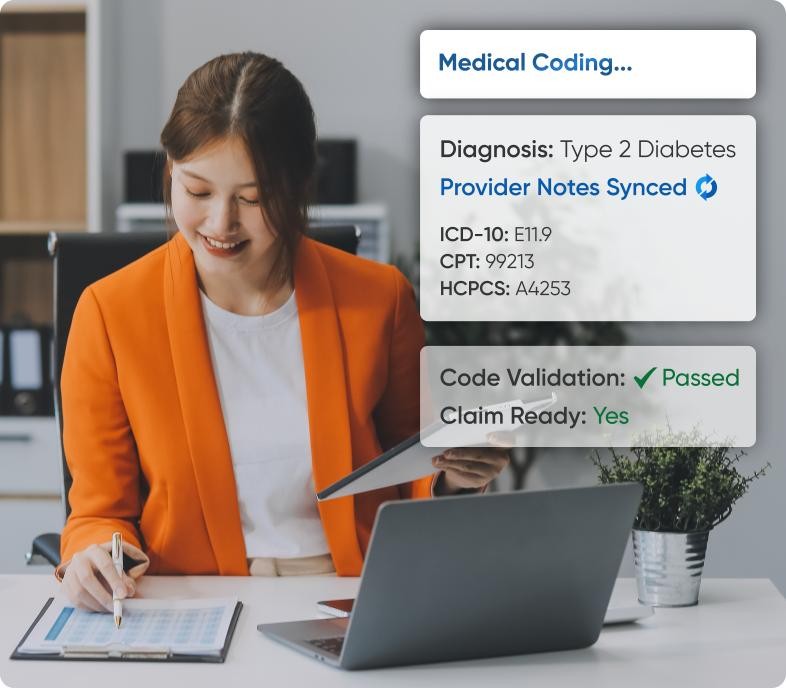
A medical coder reviews documentation, assigns diagnosis and procedure codes, follows guidelines, checks accuracy, flags documentation gaps, and supports audits and compliance.
Skills Required for Medical Coding
Medical terminology, anatomy and physiology, analytical thinking, attention to detail, knowledge of coding guidelines, and comfort with medical records and coding software.
How Can You Become a Medical Coder?
- Complete foundational education.
- Learn medical terminology, anatomy, and coding systems.
- Enroll in a recognized training program.
- Consider professional certification.
- Gain practical experience.
- Keep learning through continuing education.
Popular Medical Coding Certifications
| Certification | Organization |
|---|---|
| CPC | AAPC |
| CCS | AHIMA |
| CIC | AAPC |
| CCA | AHIMA |
Eligibility and exam pathways vary, so check each organization’s current requirements.
What Are the Common Medical Coding Challenges?
Incomplete documentation, incorrect codes, missing specificity, outdated guidelines, modifier errors, upcoding and downcoding, and payer-specific rules trip up even seasoned teams. The fixes aren’t glamorous: clear documentation, regular training, coding audits, and current official guidelines. AI-assisted claim scrubbing also catches errors before submission.
How Is AI Changing the Future of Medical Coding?
AI can analyze clinical documentation, suggest codes, speed up record processing, and flag inconsistencies. It’s a power tool, not a replacement for the carpenter. Complex cases and final accuracy still need qualified human review. That’s why Billr Health pairs AI-assisted automation with experienced specialists. See how AI in medical billing reduces claim errors.
Frequently Asked Questions About Medical Coding
What Is Medical Coding in Simple Words?
Medical coding translates doctors’ notes, diagnoses, and procedures into standardized alphanumeric codes. Insurers, providers, and health systems use these codes to share information, process claims, and keep consistent patient records.
What Are the Three Main Types of Medical Coding?
The three main U.S. systems are ICD-10-CM for diagnoses, CPT for medical procedures and services, and HCPCS Level II for supplies, equipment, and services CPT doesn’t cover. Each serves a different purpose.
Is Medical Coding the Same as Medical Billing?
No. Coding converts clinical documentation into standardized codes, while billing uses those codes to prepare claims, submit them to payers, and follow up on payment. They’re separate responsibilities that work together within revenue cycle management.
Why Is Medical Coding Important for Insurance Claims?
Payers rely on codes to understand what happened and why. Accurate codes backed by documentation support smooth claim processing, demonstrate medical necessity, reduce avoidable denials, and help providers receive appropriate reimbursement.
Do You Need Certification to Become a Medical Coder?
Requirements vary by employer and position, so certification isn’t always mandatory. However, credentials like the CPC can improve job prospects, signal verified knowledge, and often lead to better career opportunities.
Will AI Replace Medical Coders?
Unlikely. AI automates repetitive work like suggesting codes and flagging inconsistencies, but complex cases, documentation queries, and compliance decisions still need skilled human coders who understand clinical context and official guidelines.
Final Thoughts
Medical coding is the quiet translation layer behind every patient record and paid claim. Get it right, and revenue flows; get it wrong, and money quietly slips away. If coding gaps or denials are costing your practice, explore our medical coding services or talk to our team.
Another Guide’s To Help You

Billr Health was founded by healthcare revenue cycle veterans who spent years inside billing departments, clearinghouses, and payer organizations — and saw exactly where the revenue was being lost. We built the company we wished had existed when we were on the other side of this problem. Our founders spent years working inside billing departments, RCM companies, clearinghouses, and payer organizations. They saw the same problems across every practice they worked with — staff overwhelmed by claim volume, denials not being appealed, AR aging without anyone noticing, coding that was systematically leaving money behind.